Waterproof or water-resistant: which Pioneer Camp shell you actually need
A water-resistant softshell and a taped waterproof shell are sold twenty feet apart and behave nothing alike in an hour of rain. What the two words mean on a card, why a seam fails before a fabric does, what taping actually is, when a softshell is the better call, and why a jacket that has stopped beading has usually not failed at all.
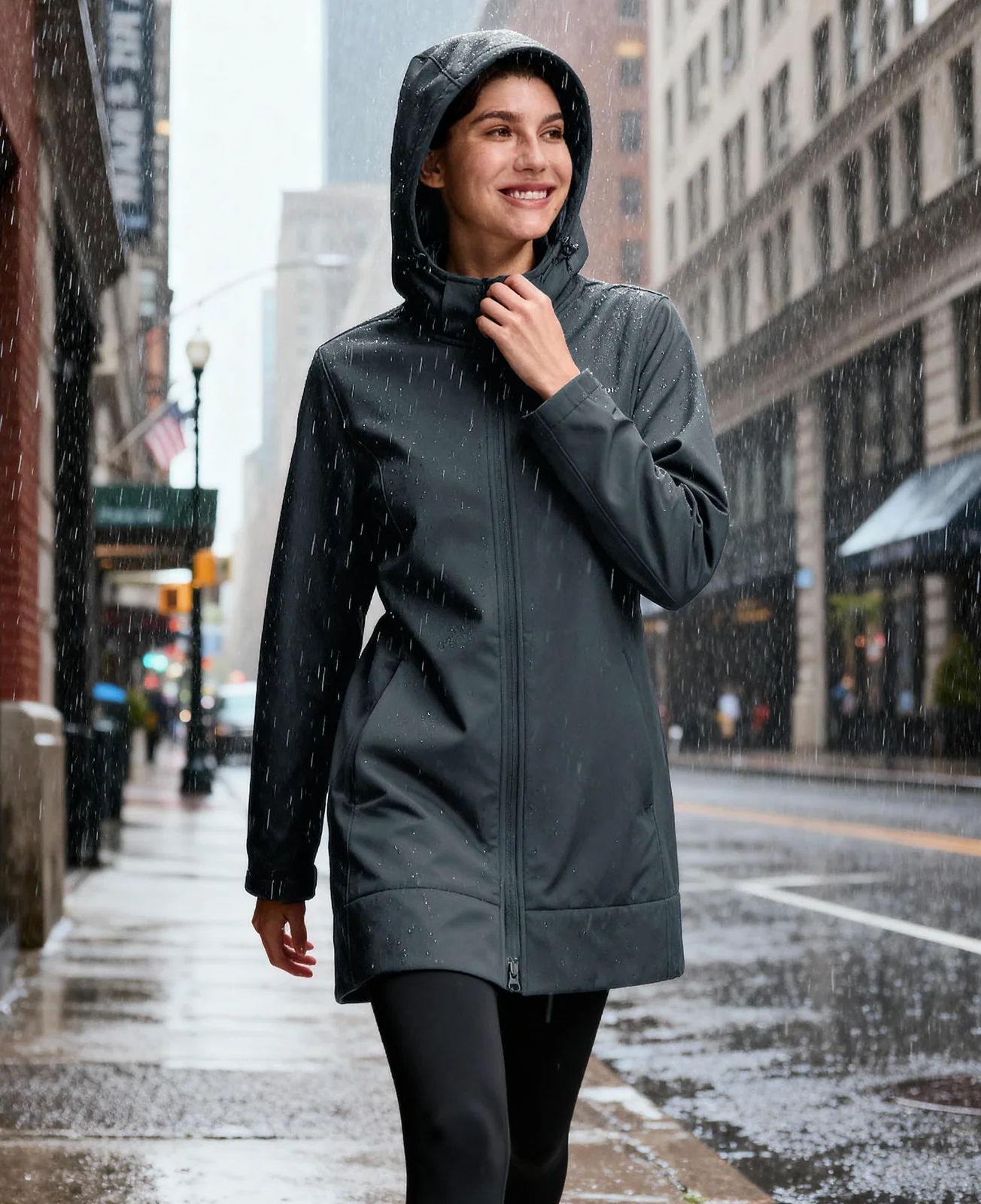
Two words, one letter apart, twenty minutes of rain
Two words, one letter apart, and the choice matters when the weather turns. On the ridge you will notice the difference in a hurry. A water-resistant jacket will shrug off light spray and a short, sharp shower. A waterproof jacket is specified in the product data as waterproof on this site and it is intended to perform in heavier, longer wet conditions. That distinction is what you feel when wind and rain meet you on an exposed track.
A jacket stops droplets in two different ways. Some garments slow water where it touches the fabric. Others slow the air that carries water. The latter approach is how a waterproof shell keeps water out: by slowing air down. You will feel that effect as extra warmth and some dampness inside during a hard walk. The trade is simple. You gain protection from prolonged wet, and you accept a warmer, damper microclimate when you are pushing hard.
The Pioneer Camp range places rain jackets, softshells and windbreakers together on one shelf, while waterproof ski and snowboard jackets sit on another. That layout helps you match function to day and activity. Sizes run S to 3XL across the range, so fit choices are wide. About half the rain jackets carry taped seams, and a couple of rain shells fold into their own pocket for compact storage.
On a hill you learn fast which jacket you need. If you are stopping frequently to take photos or watch the view, a waterproof, taped shell will keep you more comfortable in driving rain. If you are moving quickly and breathing hard, a water-resistant softshell or a light windbreaker will handle spray and wind while letting moisture out. Think of the moment you will spend on the hill. Choose for that moment, not for a theoretical storm.
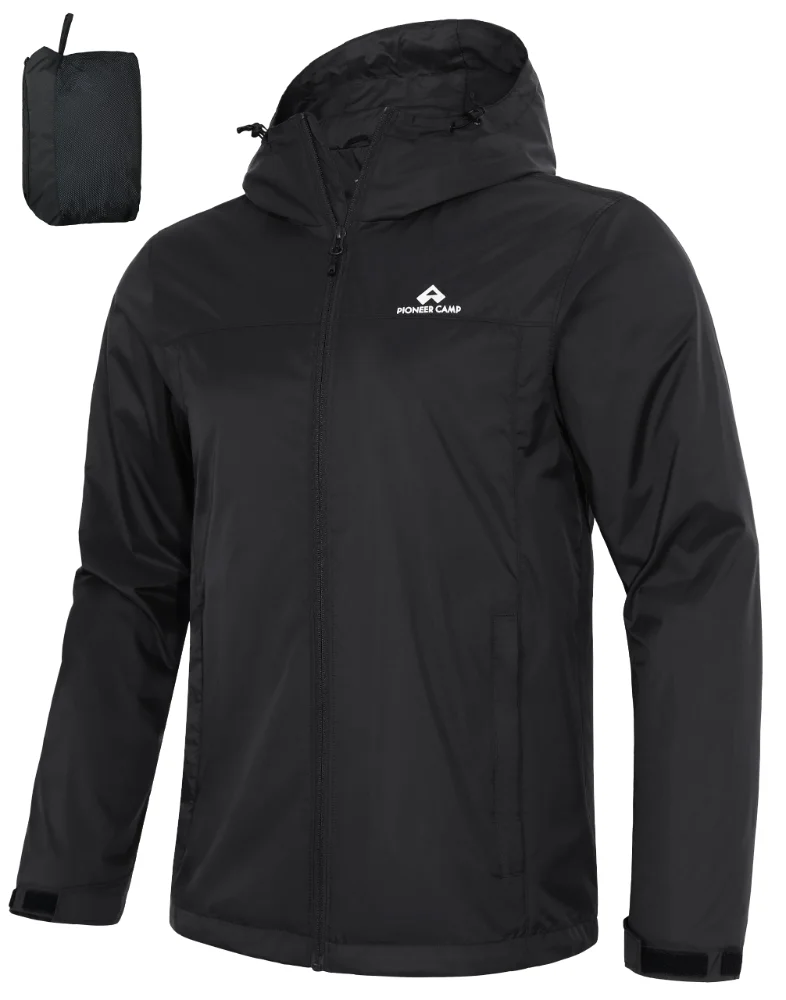
Pioneer Camp Men's Waterproof Rain Jacket, 3 pockets
Sizes L to 2XL · 3 zip pockets · 4 colourways
$54.99
What taping does, and why a seam fails before a fabric
On this site a jacket is labelled waterproof only where the product data calls it waterproof. That label is not a marketing flourish. It marks a construction and intent. A waterproof shell is built to slow the air that carries moisture, and parts of that construction are the seams and the way they are finished. A seam is a line of needle holes through the fabric. Needle holes are inevitable in sewn garments. Those holes are the usual weak points for water to follow if they are left open.
Taping addresses that weak point. On a taped jacket the seams are sealed with tape on the inside. The tape lies over the line of needle holes and blocks the path that water would otherwise take through the stitch line. Where a card does not say taped, the seams are not sealed in that way. About half of the rain jackets in the Pioneer Camp range carry taped seams. The presence or absence of taped seams is the clearest physical difference between different rain shells here.
Taped seams add a small cost in manufacture and a certain care requirement in washing. Seams that are taped will not leak along the stitch line as readily as untaped seams; however, the fabric itself can outlast a seam because the seam concentrates needle holes. In practice a seam will commonly fail before a face fabric does. That is why you will see repairs or seam failure before the fabric shows wear through.
Below is a quick comparison to help you choose. The rows list waterproof and taped, waterproof untaped, and water-resistant. The columns summarise what each keeps out, what it costs you, and when you might buy it.
| Type | What it keeps out | What it costs you | When to buy it |
|---|---|---|---|
| Waterproof and taped | Slows air carrying water, reduces seam leakage | Warmer and damper inside on hard exertion | For prolonged wet conditions and heavy rain |
| Waterproof untaped | Slows air carrying water, seams are not sealed | Potential leakage at needle holes, warmer inside | For lighter persistent rain where seam sealing is not required |
| Water-resistant | Resists light moisture and spray | Less warmth and more breathability | For active days, short showers, wind protection |
What water-resistant honestly covers
On the Pioneer Camp site an item is called water-resistant where the product data says water-resistant. That label tells you something about the fabric and the intended use. In our range the water-resistant garments are mostly softshells and light rain items. Softshells here are fleece-backed, they stretch, and they breathe better than a waterproof. Those properties make them suited to activity where ventilation matters more than barrier performance.
Water-resistant does not mean impermeable. A water-resistant face will shed brief showers and run-off from vegetation, and it will slow the first minutes of rain. If you remain exposed to heavy, driving rain for a long period, a water-resistant jacket will allow more moisture through than a waterproof shell that slows the air. The honest cover is short showers, spray from a river crossing and wind-driven drop. Choose water-resistant garments when you expect intermittent wet and you want higher breathability.
Windbreakers are part of the same shelf as rain jackets and softshells. They carry no insulation at all and several fold into a pocket for easy stowage. That makes them convenient for variable hikes where you want to ditch weight and bulk. A couple of the rain shells fold into their own pocket as well, offering a middle ground between protection and packability.
Softshells are often chosen for uphill work and technical movement. Stretch and fleece backing keep you comfortable, and the face breathes better, so less of the damp you make yourself stays inside. On active days you will notice that a water-resistant softshell stays more comfortable than a fully lined waterproof, precisely because it lets more moisture escape. Look at the product data on each card to confirm the label. Sizes in the range run S to 3XL, so you can match fit to activity and layering needs.
Pioneer Camp Men's Waterproof Rain Jacket, 3 pockets
Sizes L to 2XL · 3 zip pockets · 4 colourways
$54.99
When the wind is the problem and not the rain
Softshells deserve a separate note because they answer a distinct set of needs. They are fleece-backed, they stretch, and they breathe better than a waterproof. For many activities the primary enemy is wind and chill rather than persistent rain. In those situations a softshell will keep the worst of the wind off while allowing moisture from exertion to escape. The result is comfort during long moves where overheating and sweat are likely.
If you plan to hike fast, climb, cycle or ski in variable conditions, a softshell performs well. It resists light precipitation and spray, but it is labelled water-resistant on product pages rather than waterproof. That labelling matches what the fabric does and what you should expect when you wear it. Windbreakers sit alongside softshells and rain jackets on the same shelf. They carry no insulation and several fold into a pocket, so they are worth considering for simple wind protection and minimal carry weight.
Think about activity intensity when you choose. A slow walk with frequent stops will expose you to chill in a different way from a sustained uphill march. When you are stationary, the softshell’s fleece backing provides a comfortable microclimate. When you are moving hard the breathability makes it easier to keep heat and moisture balanced. That is the core of the softshell proposition: mobility, breathability and modest water resistance.
Match the garment to the weather and the work. If you expect continuous, heavy rain, move to a waterproof product that is specified as such on the card. If the problem is wind and spray, a water-resistant softshell is usually the better call: it stretches when you reach for a hold, and the fleece backing means one less layer underneath. The range includes options across S to 3XL so you can select fit for layering and activity.
Damp on the inside: the price of keeping water out
A waterproof shell slows the air that brings water, and that physical behaviour changes the garment’s internal climate during exertion. When you walk hard, the heat and moisture your body makes must go somewhere. A waterproof keeps external water out by slowing air movement through the layers, and that slowing reduces the amount of internal air exchange. The consequence is extra warmth and a damper feeling inside compared with an unlined jacket or a lightweight windbreaker.
That dampness is not a failure. It is the predictable result of the waterproof approach. You can manage it with simple adjustments. Wear less underneath when you know you will be working hard. That reduces the moisture load your outer layer must handle. Open the front vents or the zip to increase airflow when the weather allows. On a sustained climb you may want to remove the insulating fleece so moisture can escape more readily.
Layering choices matter. A breathable midlayer will move moisture away from your skin more effectively than a heavy insulated item. If you plan alternating hard effort and periods of rest, carry a light insulating layer to put on when you stop. Venting features on some waterproofs are designed to give you control, so use them to dump heat. The Pioneer Camp range includes rain jackets and waterproof ski and snowboard jackets that are intended for different intensities. Choose according to the likely balance of exertion and exposure during your day.
The warmth and the damp you feel inside a waterproof are the trade for better protection in sustained wet. If you will be moving at high intensity for long stretches, a water-resistant softshell or a windbreaker may be more comfortable. Check the product data to confirm whether a particular jacket is waterproof or water-resistant, so your choice matches the activity.
When a shell stops beading, it has usually not failed
Care labels are not decorative. The US Federal Trade Commission Care Labeling Rule requires that a care instruction cover washing method, bleach, drying, ironing where it is needed regularly, and warnings. The maker must hold reliable evidence for those instructions, and the label must be attached permanently and stay legible for the useful life of the garment. That legal framework exists so you can follow instructions that the maker can justify.
Follow the label on your Pioneer Camp shell. Labels will tell you how to wash, whether bleach is acceptable, how to dry, and whether ironing is needed on a regular basis. The label will also include warnings where they are necessary. Ignore them in one particular way and you will see it: fabric softener leaves a film on the face, and a shell that has stopped beading has usually not failed at all.
A common worry is when a shell stops beading. That loss of water beading is usually not a sign that the garment has failed. Fabric softener leaves a film on a face fabric and it can make water cling rather than bead. Dirt and coatings from road spray also reduce beading. Cleaning a shell according to the care label often restores water behaviour because it removes surface films. The FTC rule means that the care instructions you read must be based on evidence the maker holds, so you have a reliable path to maintain performance.
Avoid fabric softener when you wash a shell. The residue from softener is the specific culprit that leaves a film on the face fabric and reduces water beading. Use the recommended detergents and methods on the label, and keep an eye on the garment’s taped seams if it has them. Repairs and reproofing choices are outside the scope of these notes, but using the label instructions is the right first step to keep a shell performing across its useful life.
More of this sort of thing is in Field Notes, the Pioneer Camp bench keeps the whole range one click away on the front page, and the sources behind every sun and label claim are listed on how we update the catalogue.