How to wash a Pioneer Camp down jacket and a fleece without wrecking either
The commonest way to ruin a down jacket is to wash it correctly and then dry it wrongly, and the commonest way to ruin a fleece is fabric softener. What the care label is legally required to tell you, why wet down clumps, how long a proper dry actually takes, what softener does to a pile, and how to bring a shell back to beading.
What the label is required to tell you
A care label is not a suggestion. The Federal Trade Commission Care Labeling Rule requires a care instruction to cover washing method, bleaching, drying, ironing where it is needed regularly, and warnings such as "Do not iron" or "Wash separately". The Rule also requires the maker to hold reliable evidence to support those instructions, and it says testing a component alone is not enough where the finished garment behaves differently. That is why the sewn-in label matters more than any page you read. Labels must be attached permanently and securely, and they must stay legible during the useful life of the product. If a page on this site and the label sewn into a garment disagree, the label wins.
The FTC also sets out textile labelling guidance about fibre content. A garment must list fibres by generic name and by percentage by weight in descending order. A fibre under five percent is shown as "other fiber" unless it has definite functional significance. The guide names spandex as an example of a small percentage added specifically for stretch. Read that panel before you begin. It tells you which part of a jacket or base layer is responsible for the way it should be washed and dried.
Pioneer Camp has made outdoor clothing since 1999. Our range includes down jackets, several fleece constructions, merino base layers and waterproof shells, some with taped seams. Labels are sewn into each item so that the guidance you carry with the garment is available for the life of the piece. Follow that label first. Use the rest of this page only as a companion to what you find on the tag.
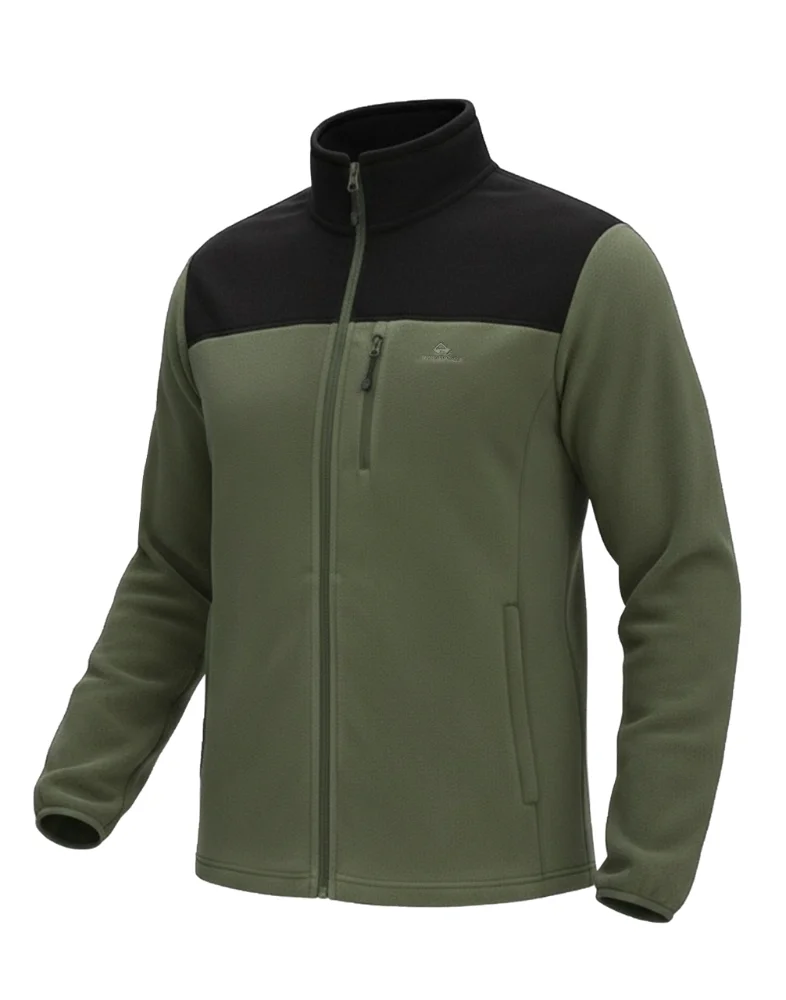
Pioneer Camp Men's Full-Zip Fleece Jacket, polar fleece
Polar fleece · Sizes S to 3XL · Pockets
$42.50
Fibre content decides the wash
The fibre panel explains what you are holding and how it will behave in water. When a label lists down first, the fill is the functional insulation and you will follow a different routine than for a fleece or a merino base layer. Where a fibre appears in small amounts it may be shown as "other fiber"; the textile guide clarifies that only fibres with definite functional significance need to be named individually. Spandex is an example a maker would list separately when it is present to add stretch.
Look at each component. A shell may list a waterproof face and a separate lining. A jacket may combine down with a fabric face and trims. The Care Labeling Rule points out that testing one component is not enough when the finished garment behaves differently. In practice that means you cannot treat the shell and the fill as if they were independent; you must respect the label for the complete garment.
Fibre content also suggests how tolerant a fabric will be of agitation, heat and products that leave a residue. Down and natural fibers need gentler handling than most synthetics. Pile fleeces have a thicker surface that depends on loft and separation of fibres for warmth; anything that flattens the pile will change how the fabric performs. Bamboo viscose tees and merino layers require different detergents and intervals between washes compared with a waterproof shell. When in doubt, follow the label on the garment and use the fabric panel to make an informed choice about method and frequency.
Washing down: cool, gentle, unhurried
Down needs cleaning sometimes. Do not rush the wash. The label will tell you whether a machine wash is permitted or if hand wash is required. If a machine wash is allowed, select the gentlest cycle the label indicates and use a detergent that rinses clean without leaving a film. The Care Labeling Rule requires that washing instructions be clear, so read the tag for bleaching, spinning and other warnings before you start.
Avoid anything that will leave a coating on the down. Fabric softener leaves a film on fibres and it is not compatible with down. That film can reduce loft and change the way feathers cluster. Rinse thoroughly until the water runs clear and the soap is out. A second rinse rarely hurts and can prevent residue that interferes with loft. Treat zips, cuffs and trims gently and close any fastenings so the garment moves through the wash with even stress.
Be mindful of labels that mention testing evidence. If a garment combines a waterproof face with down, the finished jacket may need different handling than either component alone. Where taped seams are present the label will state whether particular precautions are required. Work methodically. Take the garment promptly to its chosen drying method once the wash is complete; leaving wet down to sit will let the clusters set in undesirable clumps.
Pioneer Camp Men's Full-Zip Fleece Jacket, polar fleece
Polar fleece · Sizes S to 3XL · Pockets
$42.50
Drying down: the part that goes wrong
Most failures happen at drying. The problem is simple: wet down clumps. A down jacket taken out of a machine and hung up will dry into lumps with cold gaps between them. Those gaps reduce insulation and they can be very hard to remove once the fill has set. The solution is a long, low tumble, which breaks the clumps and restores separation. The label will tell you if tumble drying is permitted and at what general setting; follow that guidance.
Do not confuse speed with thoroughness. A long, low tumble is not about haste. It is about sustained, gentle motion that encourages the feathers to redistribute. If the label allows machine drying, check the garment periodically and tease out any lumps you can feel by hand between cycles. That manual intervention helps speed the process and improves the result without damaging the shell face.
If the label forbids tumble drying, do not improvise by hanging the jacket and heating it near a direct heat source. Heat sources can damage shell fabrics and trims. For jackets with taped seams, adhere to the label because excessive heat or incorrect drying methods can affect seam tape. Patience matters more than any trick. The down will come back to life as it dries evenly and the loft returns. Allow the necessary time; replacing the original loft by force risks damaging the fill or the shell. Follow the tag, monitor the jacket during drying and do not stop until you no longer feel dense cold lumps beneath the fabric.
Fleece: cold, inside out, and never softener
Fleeces in the Pioneer Camp range include polar, grid and sherpa constructions. Each type depends on pile and loft for insulation and comfort. Treat the surface with care. Wash a fleece in cold water and turn it inside out. That reduces abrasion to the exposed pile and helps preserve the outer face. Use a gentle detergent and rinse fully. The Care Labeling Rule requires clear direction on bleaching and other steps, so consult the sewn-in label before deciding on any additives.
Never use fabric softener on a fleece. Fabric softener leaves a film on fibres and it flattens the pile. A flattened pile loses its loft, the surface no longer traps air in the same way, and the textile feels thinner and less insulating. The effect is physical and cumulative. One treatment may not ruin a garment, but repeated use of a softening product will permanently alter the character of the fabric.
A flattened pile also builds up differently on the outside of a fleece. The surface may show matting and bobbles more quickly because the individual fibres have lost their spring. Mechanical methods such as low-friction washes and careful brushing can recover some texture, but prevention is far better. Turn the garment inside out, zip or fasten closures to avoid snags, and keep lint-producing items away during washing. Follow the label for drying; when tumble dry is allowed, use the gentlest setting possible.
Shells and merino, which ask for less than you think
Waterproof shells rely on a clean face to bead water. Fabric softener kills the beading by leaving a film that changes surface tension and prevents water from forming droplets. If a shell loses its beading, start with the label. Wash according to the instructions using a product that rinses clean and does not leave a coating. The Care Labeling Rule requires makers to provide reliable instructions; follow them for shells with taped seams or special finishes.
If the shell still does not bead after a careful wash, the label may advise on reproofing treatments or follow-up steps. Some shells regain their surface performance after the residue that interferes with beading is removed. Reproofing products exist, and some labels note whether a reproof step is compatible with the garment. Always check the sewn label because it governs compatibility with any finishing treatment.
Merino base layers are different. Wool fibers resist odor buildup and they move moisture away from the skin in a way that lets you wear them more than once between washes. That property makes merino feel like it requires less frequent laundering than many synthetics. Wash merino according to the label and avoid aggressive handling; repeated harsh washing will shorten the useful life of the knit. Between washes, air the garment and treat stains locally where possible. The label is the authority on whether a particular merino product allows machine washing, bleaching, or tumble drying, so consult it to balance care with practicality.
| Product | Wash | Dry | Never do |
|---|---|---|---|
| down | gently, cool | long, low tumble | hang to dry only |
| fleece | cold, inside out | follow label | use fabric softener |
| merino | follow label | follow label | overwash unnecessarily |
| waterproof shell | follow label | follow label | use fabric softener on face |
More of this sort of thing is in Field Notes, the Pioneer Camp bench keeps the whole range one click away on the front page, and the sources behind every sun and label claim are listed on how we update the catalogue.